
Remote Design / 2026-11-13
Remote Website Design Services: How Small Businesses Can Hire With Confidence
Compare remote website design services with a practical guide to scope, pricing, ownership, accessibility, SEO, and launch responsibilities.

Define the business outcome before contacting a designer
Remote website design services can be a practical choice for small businesses that need professional design and development without requiring a local office visit. Geography is not the deciding factor, however. The most useful starting point is a written description of what customers need to accomplish on the website. They may need to request a consultation, understand service areas, compare offerings, or browse products. Each goal calls for a different structure, content plan, and measurement approach.
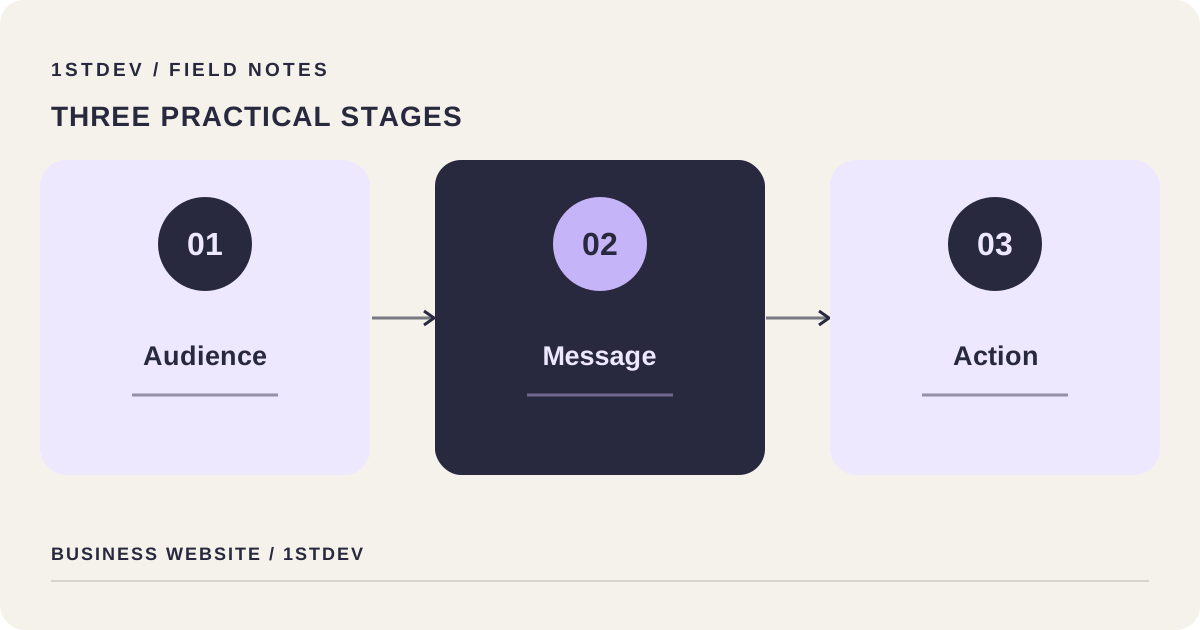
Write one sentence describing your primary visitor and one sentence describing the action you want that person to take. Then list the information they need before acting. A service business may need qualifications, service descriptions, coverage areas, and contact details. A catalogue business may need product categories and specifications. This short exercise gives remote teams something concrete to estimate and prevents a design conversation from becoming a collection of unrelated visual preferences.
Decide whether you need a landing page, business website, or application
A landing page usually concentrates on a single service or offer. A business website can support multiple services, company information, frequently asked questions, and a portfolio. A product catalogue emphasizes browsing and product information, but does not necessarily include online checkout. An application adds behavior such as accounts, booking logic, inventory, or payments. The distinctions matter because development and maintenance responsibilities expand as the system becomes more interactive.
Ask prospective providers to identify the proposed deliverable rather than relying on labels such as premium or custom. Specify how many distinct page templates are included, who prepares content, which forms or integrations must work, and whether you can edit information after launch. If your immediate need is a credible online presence, a smaller first release may be more appropriate than an elaborate platform. Plan optional features separately so their cost and dependencies remain visible.
Compare proposals by deliverables rather than headline price
Web design pricing for small businesses varies with content readiness, page count, design originality, integrations, and testing. A quote for a simple page built from an existing design system cannot be compared directly with a bespoke site that requires research, custom illustrations, and complex functionality. Request a scope table with pages, responsive states, revisions, content duties, analytics, accessibility checks, and deployment responsibilities. The table makes omissions easier to identify before signing.
Do not treat published studio starting prices as industry averages. A public package price may apply only to a defined configuration, while your requirements can add translation, copywriting, licensing, complex forms, or extra integrations. Ask for the total initial project price, what is excluded, payment milestones, and the process for approving additional work. A useful proposal describes what the customer receives and what happens when assumptions change, not merely how attractive the final website might look.
Understand the actual cost of ownership
The initial build is only one part of website cost. Domains require registration and renewal. Hosting may be billed separately or bundled for a limited period. Third-party software, premium fonts, stock media, form tools, email delivery, and commerce providers can introduce ongoing charges. Some providers include a limited defect warranty but not routine content changes or future feature development. Ask for each recurring item to be identified with its billing owner and renewal date.
Ownership should be explicit. Determine whose account controls the domain, DNS, hosting, source repository, analytics, and third-party integrations. If the agency manages these accounts, agree how access and handover will work when the relationship ends. A small business should not have to rebuild its website simply because a contractor becomes unavailable. Request documentation for routine updates, backups where applicable, and the process for moving to another provider without disrupting customer enquiries.
Make remote collaboration predictable
A remote website design process benefits from a single decision maker on each side, a shared written brief, and agreed review windows. Clarify which communication channel carries official approvals and how changes will be recorded. The team should explain the sequence of discovery, information architecture, design, development, content entry, quality assurance, and launch. It should also identify which client materials are needed at each milestone so delays can be managed openly.
Time zones are manageable when feedback is consolidated. Instead of sending individual changes throughout the day, collect comments against one design version and mark decisions as approved or pending. Ask whether a revision round covers small adjustments within the approved direction or a complete change in concept. Establish what happens when your team discovers a new requirement halfway through development. A written change request protects both the business budget and the developer's delivery schedule.
Verify work samples without assuming every demo is a client project
A portfolio can contain paid client work, internal products, prototypes, and speculative concepts. All may demonstrate useful skills, but they are not equivalent evidence of commercial outcomes. Ask the provider to label each example accurately and explain which parts they personally designed or developed. Look for relevant patterns: understandable navigation, readable text, mobile layouts, accessible controls, and an obvious route to contact or purchase. Visual novelty alone is not proof that a website works well for customers.
When a case study claims a business improvement, ask how it was measured and whether the client authorized the claim. Do not require dramatic conversion statistics from every small studio; honest process evidence and a working demonstration may be more informative than unverifiable numbers. If the provider shows a redesign concept for an existing brand, distinguish the concept from an official engagement. This is particularly important when comparing remote providers across countries, where independent verification can be harder.
Treat technical SEO as a defined deliverable
Technical SEO should be discussed in practical terms. Ask whether the team will deliver unique page titles, descriptive headings, crawlable links, appropriate canonical URLs, sitemap entries, and sensible internal navigation. Google's Search Central guidance emphasizes helpful, reliable, people-first content rather than content created only to attract search traffic. A website launch can establish a sound technical foundation, but it cannot guarantee rankings, traffic, or enquiries. Those results depend on the market and ongoing content quality as well as the implementation.
For an international business, decide which language and market each page serves. Translation, localized contact details, and relevant service descriptions may require additional work. Ensure the project includes an approach to Search Console access and a way to review indexing after launch. If the provider offers ongoing SEO, ask what monthly activities and reporting are actually included. Separate technical setup from future editorial work so the initial contract does not imply an unlimited search marketing service.
Include accessibility and performance in acceptance testing
An attractive interface can still be difficult to use. W3C guidance recommends identifying form controls with appropriate labels, which helps people understand and operate forms using different devices and assistive technologies. Test the contact journey with a keyboard, check whether errors are explained, and verify that essential information remains readable on narrow screens. Ask the designer to show how navigation and calls to action behave without relying on hover alone.
Performance should also be evaluated with meaningful tools. Google's web.dev documentation identifies Largest Contentful Paint, Interaction to Next Paint, and Cumulative Layout Shift as Core Web Vitals for loading, responsiveness, and visual stability. These are measurable quality indicators, not promises of sales. Test representative pages on mobile and desktop, and distinguish laboratory results from real-user data. Discuss large images, third-party scripts, and animation costs before approving features that might make the site slower or harder to operate.
Plan launch, redirects, and post-launch support
A new website needs more than a final visual approval. Before launch, test important forms, contact links, navigation, language versions, metadata, and mobile behavior. Confirm that the business can receive enquiries and that analytics is configured with appropriate consent and privacy considerations. For a redesign, inventory important existing URLs and agree how redirects will be handled. Replacing a page without accounting for its previous address can disrupt bookmarks and links that customers already use.
Ask who will monitor the first days after launch, who can fix a broken form, and what counts as a warranty defect. Clarify whether deployment includes DNS changes, search indexing checks, and a handover meeting. Keep a short list of launch-critical issues separate from optional improvements. A staged launch can reduce risk when integrations or content are still being finalized, provided that visitors are not exposed to incomplete or misleading information.
Request a proposal that supports a real decision
When shortlisting remote web development for small business, send the same brief to each provider. Include the business goal, required pages, content status, integrations, preferred launch window, and expected ownership arrangement. Ask each provider to return a scope, assumptions, milestones, revision policy, exclusions, and ongoing-cost estimate. Comparing answers to the same brief reveals more than comparing design styles alone. It also shows whether a provider asks useful questions and recognizes uncertainties before committing to a price.
If you are considering 1stdev, start with the English studio overview and the landing page service for a focused offer. Share your business type, the pages you need, your existing website if any, and the main action visitors should take. Request a written consultation and scope recommendation rather than an unsupported promise of traffic or revenue. The right first step is a clear agreement about what your website needs to do and how the work will be delivered.
Frequently asked questions
Is hiring a remote web designer riskier than hiring locally? Distance does not automatically make a project riskier. Unclear ownership, undocumented requirements, and weak approval processes are the more useful risks to evaluate. Ask for a written scope, clear milestones, evidence of relevant work, and an agreed communication process. Confirm which jurisdiction and payment terms apply before committing.
How much should a remote small-business website cost? There is no single responsible figure without a defined scope. Compare fixed deliverables, revision limits, content preparation, hosting, integrations, and support. A starting price published by one studio is that studio's offer, not a reliable market average. Obtain a written quote for your actual requirements.
Should I redesign my current site or build a new one? Begin with an audit of content, navigation, mobile usability, technical limitations, and the tasks customers cannot complete. A focused improvement may be sufficient if the foundation is sound. A larger redesign is easier to justify when the structure or technology prevents important business needs. Preserve useful URLs and plan redirects if addresses change.
References
Supporting sources for technical guidance. 1stdev prices reflect its own offerings, not universal market averages.
1STDEV / WORK WITH US
Need a website with a clear scope?
Share your goals, audience, preferred timeline and budget. We can prepare a written project scope and quotation remotely.